
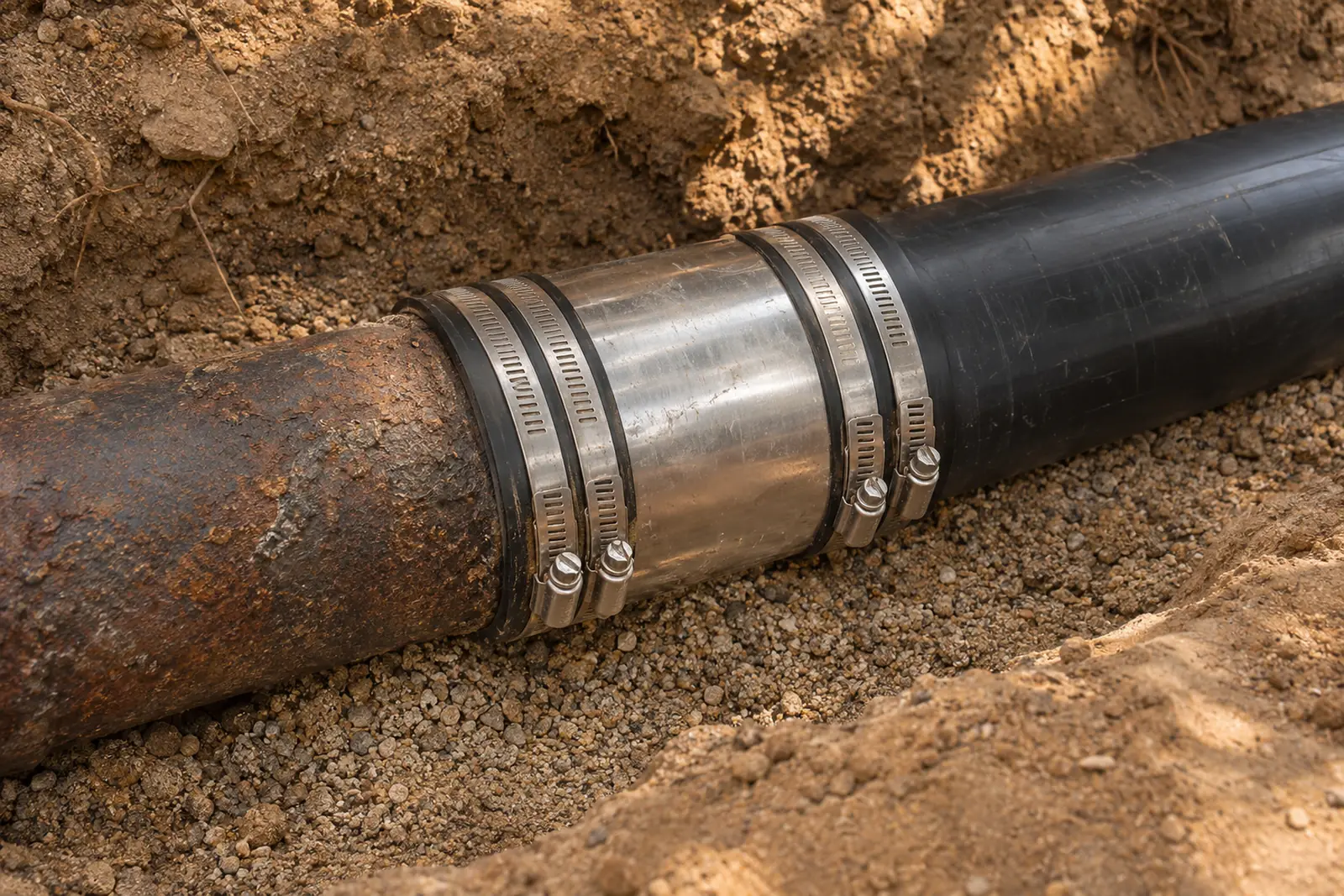
What trenchless approaches can solve
A damaged sewer beneath a finished yard or walkway raises two separate questions: what repair is needed, and how the contractor can reach it. Trenchless methods may reduce the surface work involved in an appropriate repair. They are not a substitute for identifying the defect or a promise that every valuable surface remains untouched.
Lining may address suitable defects while retaining the existing host. Bursting places a new pipe along an assessed route and needs a different evaluation of access and surroundings. Ask which result the proposal delivers and which parts of the existing system remain. A bid labeled only “trenchless sewer” leaves too much uncertainty about the actual installation.
When avoiding a continuous trench makes sense
Trenchless work can be worth comparing when suitable pipe geometry, access and surroundings allow the selected method to correct the documented problem. Consider the complete surface impact, including entry points, equipment placement, connections and restoration. Ask the contractor to show the footprint rather than relying on a “no digging” phrase that omits the access work.
Choose a lining-specific review when the existing pipe may be retained and the question is whether it can support rehabilitation. The important details are host condition, preparation, connection treatment and liner endpoints, not simply whether excavation can be reduced. Read the pipe lining assessment guide.
A collapsed route, unsuitable host or grade correction may make open replacement the better option. Direct excavation can provide access to change the alignment rather than preserving it. Ask why a trenchless method would or would not resolve the particular defect. Compare open sewer line replacement.
Trenchless Sewer Repair: step by step
- 01
Diagnose before choosing a technique
Obtain footage and identify the defect location. Separate clearing an obstruction from repairing damaged pipe. The contractor should explain whether the line needs rehabilitation, replacement or a correction to the route before proposing specialized equipment.
- 02
Compare feasible approaches
Request a lining, bursting or open-replacement explanation tied to the same repair endpoints. Ask about access constraints, branches and retained sections. Reject comparisons that change the scope without clearly describing what each alternative includes.
- 03
Mark access and approval needs
Walk the proposed equipment and excavation areas. Confirm utility considerations, private and public boundaries, permits and restoration. Request an explanation of how the work affects a walkway or driveway even when there is no continuous trench along the route.
- 04
Carry out the selected system
The chosen installation has method-specific steps, equipment and wastewater restrictions. Get those instructions from the contractor performing the work. A generic trenchless schedule should not replace the actual preparation, installation and verification plan for that system.
- 05
Confirm the repair outcome
Ask for evidence that the intended section was treated and relevant connections remain usable. Retain the installed scope, permit and inspection records, completion footage where provided and written terms covering the work rather than relying on a promotional method name.
How long trenchless repair takes
Compare the full schedule, not only time spent installing the pipe. Lining includes cleaning, preparation and curing; bursting involves access excavations and new-pipe connections. Approval, inspection and restoring access areas can occur outside those active stages. Ask the contractor to identify which part of the proposed timeline each estimate describes.
Trenchless cost is a whole-project comparison
The method, repair length, access construction, preparation and connection work affect a trenchless estimate. Surface restoration avoided by one approach may offset equipment or setup costs, but that cannot be assumed for every route. Compare the same defect and repair endpoints before deciding which proposal offers better value.
Have the contractor say whether cleaning, camera work, permits, excavations and finishing are included. A liner bid and a new-pipe bid can leave different portions of the system untouched. The cheapest installation stage is not necessarily the lowest total once excluded access work or restoration is added.
Trenchless Sewer Repair price range
Trenchless Sewer Repair figures are published planning estimates, not a SD Sewer Repair quote. Final pricing requires a camera inspection.
The trenchless job and per-foot ranges cover differing methods and scopes. Compare the actual installation approach before using either range, and do not combine them as separate charges.
For trenchless sewer repair planning, the separately listed permit and inspection estimate is $250–$625. This is not a City fee schedule; confirm actual charges and whether they are already included.
Get trenchless sewer repair options for your property
Two quick steps. No payment and no obligation to hire.
Get trenchless sewer repair options in San Diego
Step 1 of 2
Prepare for a trenchless comparison
Bring the inspection recording and any prior repair information to the discussion. Identify surfaces you hope to preserve and ask the contractor to distinguish those preferences from technical requirements. Clear access to the known cleanout, but do not excavate or remove caps to make the project look simpler before assessment.
Before the work, confirm where equipment and any access pits will be placed, which areas are out of bounds and what occupants must do during wastewater restrictions. Secure pets and keep gates available as agreed. Save a written description of restoration so reduced excavation does not become an unclear promise about the finished property.
San Diego rules still apply to trenchless work
The City’s plumbing permit guidance includes sewer piping repairs without making “trenchless” a blanket exemption. Bulletin 166 requires a Right-of-Way Permit for work in the public right-of-way or water/sewer easement. Have the contractor confirm requirements for the actual technique and access locations; fewer excavations do not erase the boundary between private work and public infrastructure.
Trenchless Sewer Repair FAQs
Is trenchless repair always no-dig?
No. Access excavations, connections and equipment space can still be required. Ask for a marked work footprint and restoration scope. Reduced continuous trenching is a more accurate description than assuming every trenchless project leaves the surface untouched.
Does trenchless mean a new sewer pipe?
Not always. A lining system rehabilitates a suitable host; bursting is a replacement approach. Ask the contractor to state which method is included and identify retained sections so you understand what “new” means in that particular proposal.
Can every sewer be repaired without a trench?
Suitability depends on condition, alignment, connections, access and the selected method. A route requiring grade correction or an unsuitable host may need excavation. The explanation should identify the limiting condition rather than making an unsupported universal claim.
Should I compare lining and bursting quotes directly?
Compare their intended outcomes first. They may address the same damaged length but retain or replace different components. Include preparation, connections and restoration in both scopes before treating the totals as prices for an identical job.
What should a trenchless estimate name?
It should specify the actual method, treatment endpoints, access areas, preparation, connections, approvals and completion checks. Written exclusions matter as much as inclusions. A proposal saying only “trenchless repair” does not describe enough to authorize an informed project.