
What clearing sewer roots accomplishes
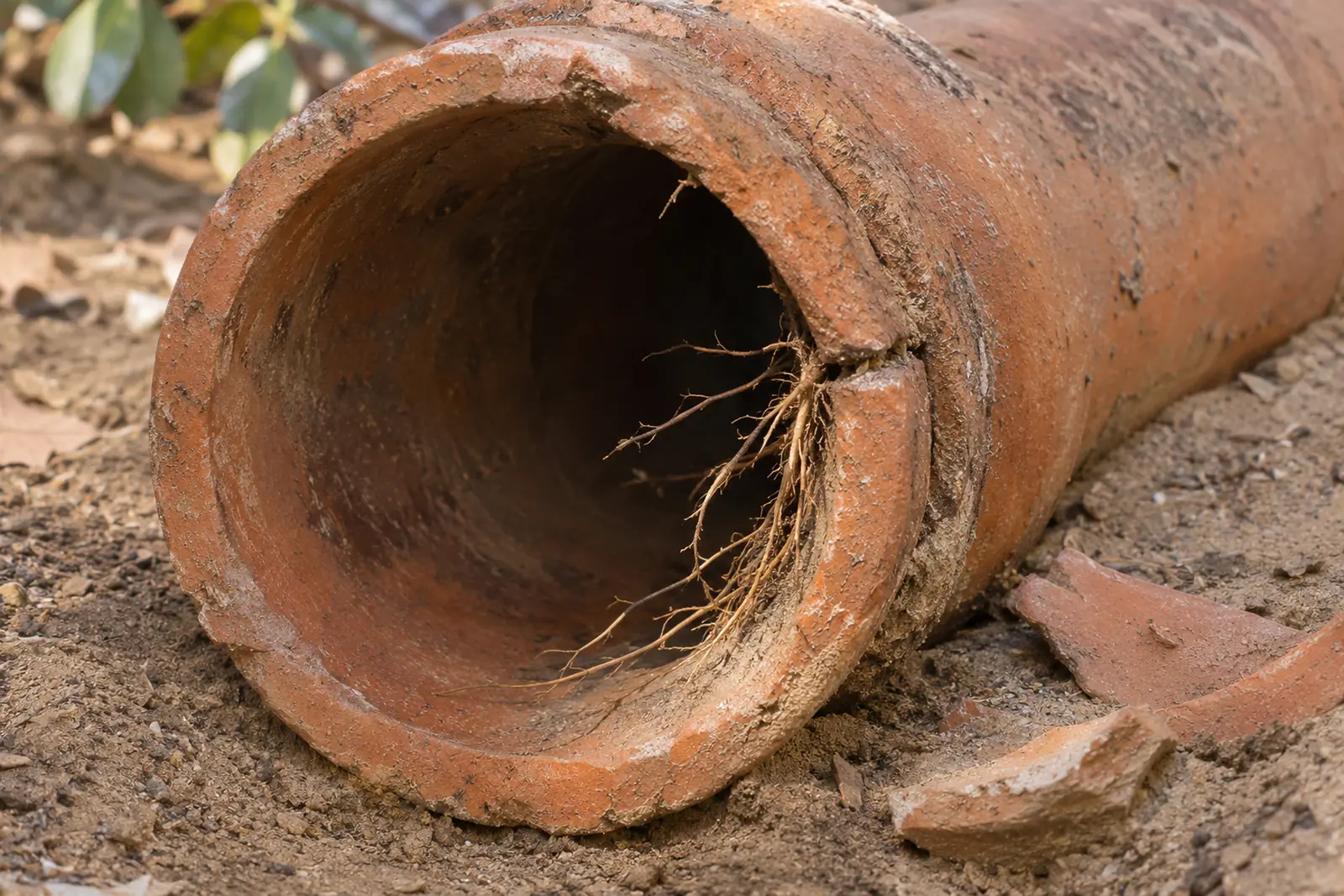
Root growth visible on camera can restrict flow and contribute to repeated stoppages. Removing the obstruction may restore a usable passage, but the cleared pipe may still have a damaged joint or another opening. Ask the contractor to distinguish the immediate clearing result from any recommendation intended to address the entry point.
A tree near the sewer route is not proof that roots caused the backup. The evidence should show growth inside the inspected pipe and identify the affected segment. Tell the operator when symptoms returned after earlier clearing, whether roots were actually recorded and which method was used. That history is more useful than attributing every blockage to landscaping.
When removal is enough to start—and when repair matters
Root removal can be an appropriate immediate maintenance task when the obstruction is accessible and the pipe’s condition supports the selected technique. Ask what the operator expects to clear, how the result is checked and which findings will trigger a separate repair discussion. A recommendation for repeated maintenance should explain why that approach is acceptable for the remaining pipe condition.
If a suitable pipe has entry points that a liner can address, rehabilitation may be a better long-term scope than cutting the same growth repeatedly. Find out whether the recorded defects and affected joints are all included, and whether the host can be prepared safely. Evaluate lining for a suitable host.
A collapsed, badly deteriorated or unsuitable section may need replacement instead of continued root clearing. The alternative should be tied to the visible defect and route, not proposed solely because roots were found once. Compare replacement for damaged sections.
Root Removal: step by step
- 01
Confirm roots are the obstruction
Review available footage and the history of repeated blockage. Ask the contractor to identify the affected section and whether other material is also restricting flow. A presumed root problem should not become a diagnosis without supporting findings.
- 02
Select suitable clearing equipment
The operator assesses pipe condition and access before choosing a root-clearing technique. Clarify whether jetting, cutting or other preparation is included and when the work will stop if damage or a blocked passage makes the initial plan unsuitable.
- 03
Clear the agreed section
The professional removes growth within the defined scope. Follow any wastewater restrictions and remain away from equipment and open access points. Clearing should be described as maintenance unless a separate structural repair is included in the authorization.
- 04
Inspect the exposed condition
Once growth is removed, ask for evidence of the joints and pipe surface that were previously obscured. Discuss entry locations, remaining defects and any areas the camera cannot assess. Restored flow alone should not be called proof of a sealed line.
- 05
Choose a follow-up plan
Compare condition-based maintenance with an appropriate repair of the affected pipe. Request the reasoning and written scope for either choice. Keep the recording and service details to assess recurrence rather than relying on a generic annual cleaning recommendation.
Root clearing time and recurrence
The visit length depends on access, the extent of growth and the condition discovered during clearing. Confirm whether the planned visit includes a post-removal camera assessment and how the operator handles an obstruction that cannot be safely cleared. A root-clearing window is not a commitment to complete any repair revealed afterward.
What affects root-removal cost
Access, growth extent, selected equipment and included inspection determine the clearing scope. Ask whether the quote covers one affected section or a broader cleaning pass and whether a separate charge applies if the pipe cannot be reached. Removing roots and repairing entry defects should have distinct authorizations.
Compare what is documented after the work, not only the clearing price. A proposal that includes footage and entry-point assessment delivers different information from one that only restores flow. Discuss how added repair work would be priced if the cleaned pipe reveals a structural problem.
Root Removal price range
Root-removal pricing depends on access, root density and the pipe condition the camera shows. Ask for a property-specific clearing quote that states whether cutting, jetting and a follow-up inspection are included.
Get root removal options for your property
Two quick steps. No payment and no obligation to hire.
Get root removal options in San Diego
Step 1 of 2
Prepare for a root-clearing assessment
Collect prior videos and notes about recurrence. Clear the approach to known cleanouts and identify access constraints without opening a backed-up pipe. Tell the operator about any recently applied drain chemicals so precautions can be assessed. Do not introduce a treatment simply to prepare for the appointment.
Show nearby landscaping and irrigation as context, not as a confirmed diagnosis. Secure pets and ask how the equipment route will be protected. Do not cut tree roots or undertake excavation based only on the sewer symptoms; discuss the recorded pipe condition and any landscaping implications with the appropriate professionals.
San Diego lateral maintenance and root-entry repairs
City guidance places maintenance of the lateral through to the main with the owner and specifically includes keeping roots out of the usable passage. If clearing leads to structural piping repair, confirm the Simple “No-Plan” permit pathway and any public right-of-way requirements. Root removal does not change the property-line arrangements for who handles a documented lateral break.
Root Removal FAQs
Will cutting sewer roots seal the pipe?
No. Clearing removes the obstruction but does not itself seal a joint or rebuild a damaged section. Ask for a post-clearing assessment of the entry point and compare any suitable repair with the option of continued maintenance.
Do roots mean the entire line has failed?
Not automatically. The affected location, remaining pipe condition and access determine the scope. Have the contractor say whether growth is limited to a specific joint or accompanies broader deterioration. One recorded root entry is not evidence of identical damage everywhere.
Should I remove a nearby tree?
Do not make that decision from sewer symptoms alone. Establish whether roots are inside the pipe and where they entered. Discuss tree-related decisions with appropriate professionals separately from the contractor’s explanation of the buried pipe defect.
Can hydro jetting clear root growth?
It may be part of a suitable root-clearing plan, depending on equipment and pipe condition. Check whether cutting or another step is included and how the operator verifies the result. No single cleaning technique fits every root obstruction.
Why inspect after the roots are removed?
Growth can hide the joint or defect that allowed entry. A clearer view helps distinguish a maintenance issue from damage needing repair. Request documentation of what remains so any long-term recommendation is tied to observable conditions.