
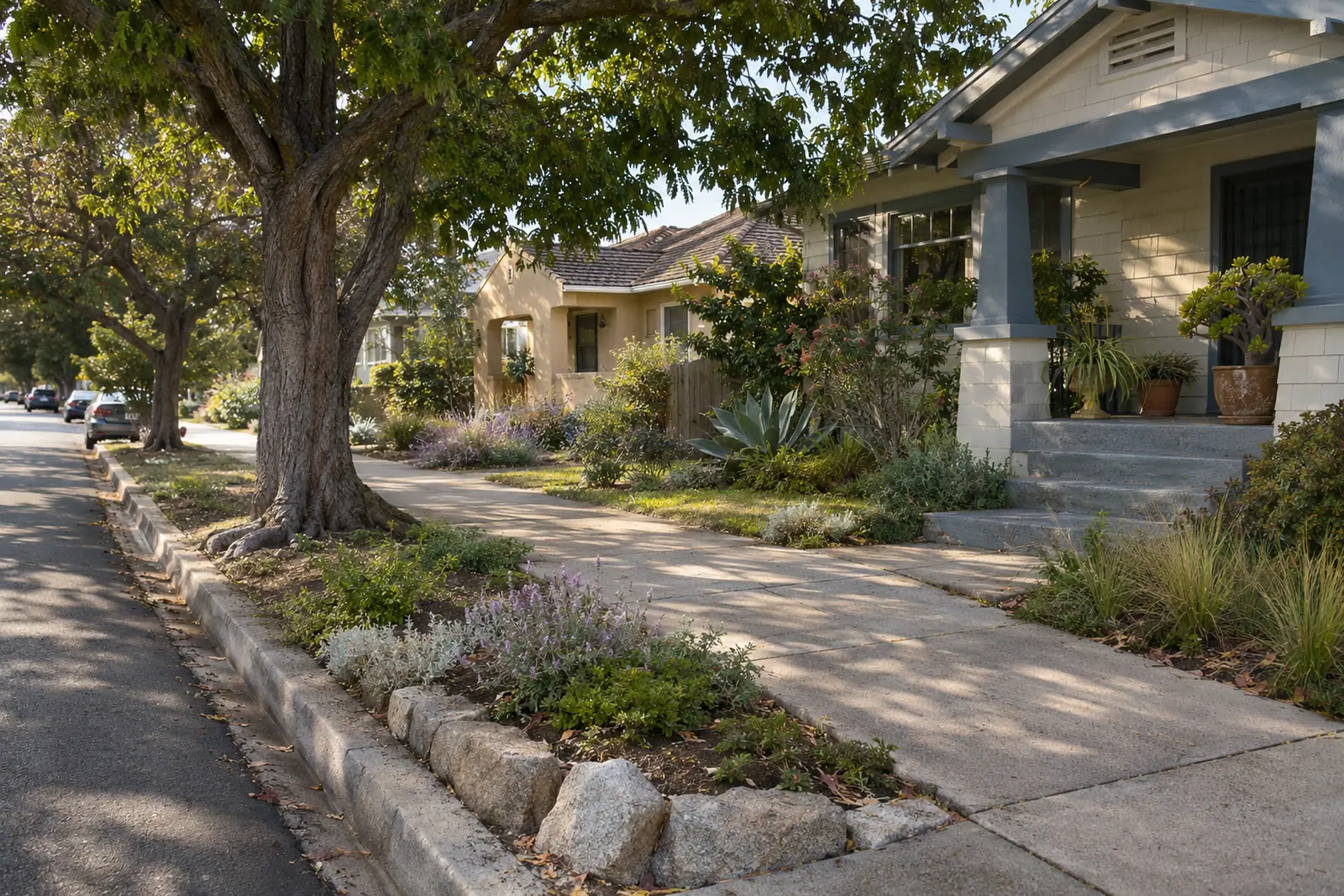
Several building eras on one peninsula
The City’s Peninsula Community Plan traces residential growth in Roseville and Loma Portal after 1910 and describes 1940 to 1960 as the fastest period of residential growth on the Peninsula. It describes Fleetridge as largely developed in the 1950s. Peninsula Community Plan, historical background ↗
That history tells you homes here were built across several decades. It does not tell you how old your sewer lateral is or what it is made of. Many houses have had partial replacements, remodels or earlier repairs, so the original build year and the pipe in the ground can differ. Gather any past camera recordings, repair invoices or permit records before an inspection, and ask the inspector to note every change in pipe material along the run.
The City’s lateral guidance names concrete, clay and cast iron as older lateral materials and plastic as a newer one, and associates older laterals with root intrusion or deteriorated sections. An inspection or property record is needed to identify the material at your home. City sewer lateral guidance ↗
Lots, narrow roads and equipment access
The plan describes the Wooded Area as having large lots and many narrow, sometimes unpaved roads, and describes Fleetridge lots as generally larger than other postwar Peninsula tracts. Peninsula Community Plan, neighborhoods ↗
On a sewer job, access decides a lot. Before comparing bids, ask each contractor how equipment will reach the work area, where any access opening or pit would go and who restores the surface afterward. A trenchless proposal and an excavation proposal can look very different on a long, landscaped lot, so make sure both quotes describe the same starting point, ending point and restoration scope. There is no standard Point Loma surcharge; the cost follows the conditions at your property. Point out gates, irrigation lines and paving you want protected before any equipment arrives.
Mature trees and root questions
The plan identifies substantial eucalyptus and evergreen trees in the Wooded Area and large trees and shrubs in La Playa. Peninsula Community Plan, neighborhoods ↗
Large trees near a sewer route are a reason to look closely, not proof of a problem. Ask the inspector whether roots are actually visible in the recording, at which joints, and how far those points sit from the building and property line. If roots are found, compare clearing alone with a repair that addresses the entry points. Read more about root removal and sewer camera inspection.
Hillside parcels
The plan describes La Playa’s hillside above Rosecrans Street and includes slope analysis and hillside development guidance. Peninsula Community Plan, conservation and urban design ↗
Not every Point Loma lot is steep, but on a sloped parcel the sewer route, excavation access and surface restoration need extra attention. Ask the contractor to mark the pipe route on a site sketch, explain how any trench or pit will be supported and restored, and say whether the slope affects the method they recommend. A community plan is not a geotechnical report for your lot, so parcel-specific questions belong with the contractor and, where needed, the City.
Coastal zone review
The Peninsula plan includes a coastal zone boundary and addresses erosion and stabilization along Sunset Cliffs. The San Diego Municipal Code sets out when a Coastal Development Permit is required and lists exemptions. Peninsula Local Coastal Program ↗ · Municipal Code coastal development permit rules ↗
A coastal address does not automatically mean a sewer repair needs a Coastal Development Permit. Ask the contractor to confirm the parcel’s jurisdiction and whether the proposed excavation or restoration triggers coastal review, alongside the ordinary plumbing permit. Our permits and inspections guide explains the City’s standard permit path.
Where “Point Loma” begins and ends
The City’s Peninsula planning area includes several distinct neighborhoods, and its boundary is not identical to every everyday use of the name Point Loma. City Peninsula community profile ↗ Share your ZIP code and street when you call or send a request so the right jurisdiction and requirements can be checked.
Next steps for a Point Loma sewer problem
- Start with a recorded camera inspection that shows the full run, the material and the location of any defect.
- Ask how access, trees and slope affect the method, and get restoration written into the scope.
- Confirm the plumbing permit and whether coastal review applies before work begins.
- Compare estimates using the sewer line repair cost guide.