
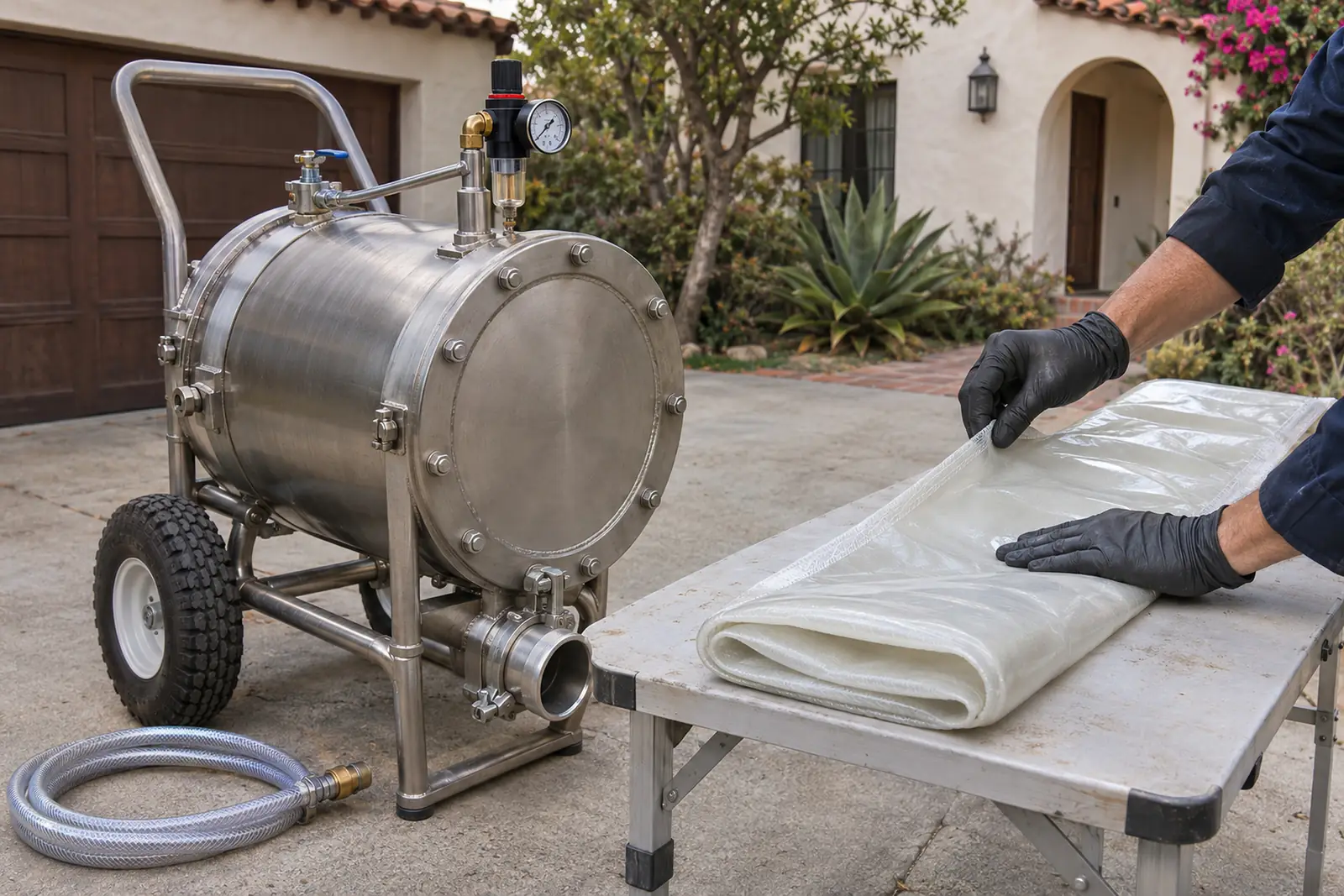
What a liner can address
Lining may be considered for cracks, leaking joints and some deteriorated sections when the original pipe remains a usable host. It is a rehabilitation method, not simply a coating poured into a blocked drain. The contractor should identify the exact defects, specify the length being treated and explain how connections will remain open after installation.
A sewer lateral connects your building’s wastewater piping to the public main. On a line with recurring root intrusion, cleaning removes the obstruction while a suitable liner may address the entry points. Have the contractor say whether every damaged joint is included, particularly where older pipe meets a previously replaced section. A partial liner does not rehabilitate portions outside its scope.
When lining is a good fit—and when it is not
Consider lining when inspection establishes a continuous, accessible host pipe and the proposed liner can address the documented defect. Reduced surface disturbance may matter under a finished yard or walkway, but access excavations can still be necessary. Request an explanation of the liner system, its suitability for the pipe diameter and the treatment of branch connections.
A collapsed passage, an unsuitable host or a low section requiring slope correction may call for excavation and replacement instead of lining. A liner generally follows the existing route; ask how the proposal handles any standing water rather than assuming an inner pipe will change the grade. Compare sewer line replacement.
If inspection finds buildup but no defect needing rehabilitation, cleaning may be the appropriate scope. Do not pay for a liner solely because a sewer has stopped flowing; first separate the obstruction from the condition of the pipe itself. Read about hydro jetting.
Pipe Lining: step by step
- 01
Review the camera evidence
Obtain a recorded inspection showing the proposed start and end points. Ask the contractor to identify material changes, damaged joints, connections and anything that could prevent the liner from reaching its intended position.
- 02
Prepare and recheck the host
The contractor selects cleaning and preparation appropriate to the condition of the pipe. A second look should establish whether obstruction removal has revealed damage that changes the original lining proposal or makes a different repair necessary.
- 03
Confirm design and permissions
Before installation, clarify access locations, permits, liner specifications and the planned handling of wastewater. The estimate should distinguish preparation from the liner itself and identify who coordinates any required inspection with the permitting authority.
- 04
Install and cure the liner
The crew places the selected liner and cures it using the specified system. Follow the contractor’s wastewater-use restrictions throughout this stage; avoid assuming that a toilet can be used simply because no open trench is visible.
- 05
Check the finished passage
Request completion footage showing the treated section and usable connections. Retain the installed length, system information, inspection records and written warranty terms so a future contractor can understand exactly what was rehabilitated and what was left untouched.
How long pipe lining takes
A lining schedule has separate preparation, installation, curing and verification stages. The active installation is not the whole project: cleaning difficulty, access work, permit review and curing requirements can change the schedule. Ask for the expected wastewater shutdown window and the point at which the contractor will confirm fixtures can be used again.
Lining cost drivers
The installed length and diameter are only part of a lining estimate. Preparation, access, difficult bends, branch treatment and the chosen system also affect scope. Check whether inspection and cleaning are included, what happens if preparation shows the host is unsuitable, and whether the estimate includes closing any access excavation.
Pipe Lining price range
Pipe Lining figures are published planning estimates, not a SD Sewer Repair quote. Final pricing requires a camera inspection.
For pipe lining planning, the separately listed permit and inspection estimate is $250–$625. This is not a City fee schedule; confirm actual charges and whether they are already included.
Get pipe lining options for your property
Two quick steps. No payment and no obligation to hire.
Get pipe lining options in San Diego
Step 1 of 2
Prepare for a lining assessment
Locate any prior sewer recordings and repairs, and clear a safe route to the cleanout—the capped opening used to access the drainage pipe. Leave opening or modifying it to the contractor. Point out irrigation, gates, recently installed paving and areas you want protected before the crew proposes equipment or access locations.
Before installation day, agree how long occupants will avoid flushing, laundry, showers and other wastewater discharge. Plan around that restriction, keep pets away from work areas and ask which surfaces may be disturbed. Get product-specific safety instructions from the installer rather than relying on assumptions about resin handling or curing equipment.
San Diego lining permit questions
San Diego lists sewer piping repairs in its Simple “No-Plan” plumbing permit process. Do not interpret “trenchless” as “permit-free”: have the contractor confirm the requirements for the liner scope and any access work. Public right-of-way or sewer-easement work involves the City’s separate requirements. The EPA describes CIPP principles but does not approve a particular product for your property.
Pipe Lining FAQs
Is epoxy lining the same as CIPP?
CIPP means cured-in-place pipe. Epoxy describes a resin used by some systems, not every possible lining product. Ask which system is proposed and what its installation requirements are instead of assuming all “epoxy lining” offers have the same scope.
Can a liner fix a belly in the sewer?
A liner ordinarily follows the host pipe’s alignment. If the inspection shows a low section holding water, ask how the proposed work corrects that specific condition. Excavation and grade correction may be more suitable than preserving the existing shape.
Does the entire sewer need to be lined?
Not automatically. The recommended length should follow the defects and usable access points. Ask why the proposal covers that section, whether untreated joints remain vulnerable and how the ends of a partial liner are handled.
Will lining block a branch connection?
Branch connections must be identified and addressed in the design and installation scope. Ask the installer how each relevant connection remains usable and request final inspection evidence. Do not assume a simple end-to-end liner includes every connection operation.
What warranty should I ask about?
Request the actual written terms for the liner product and installation, including exclusions and who handles a claim. A general service-life statement is not the same as a warranty, and this resource does not guarantee an installer’s work.
Related sewer services
Trenchless sewer repair
Compare rehabilitation with replacement before selecting a low-excavation approach.
Trenchless sewer repairPipe bursting
Consider a new pipe on the existing route when retaining a host is unsuitable.
Pipe bursting